

Day One: Setting Off and Finding Our Way
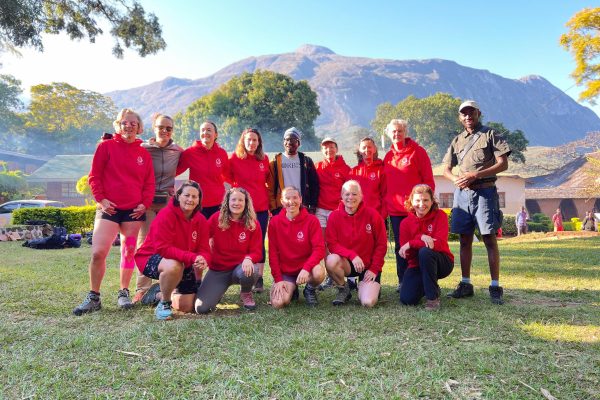
On a bright Saturday morning, everyone in our group was happy and ready. At 8 AM., we gathered for a mountain safety briefing led by our guide, Hard Helmet (Patrick). Our goal was clear: summit Sapitwa Peak, the rooftop of Malawi.
We began along the Skyline Trail, known to be a tough path, especially for first time hikers. About 40 minutes in, Hard Helmet to taught the group a Malawian song to keep our spirits up: Malawi dziko lokongola (x2), Kumapezeka Phiri la Mulanje
(Malawi is a beautiful country, where you will find Mulanje Mountain). The song lit up the group, making the tough climb feel lighter and more joyful.
As the trail grew steeper, we ensured that no one was left behind, energized by spectacular views of the Likhubula valley and the underlying plains that formed a beautiful backdrop. Five hours later, we reached a plateau where we paused for lunch.
After lunch, we started off for Chisepo Hut, we crossed a mountain stream that feeds into the Likhubula River, then began the Knife Edge Trail, a narrow ridge shaped just like the edge of a blade. It was a challenging section, but it rewarded us with breathtaking views of the Three Sisters peaks: Nandalanda, Khuto, and Dzoole. From a distance, they appear so close together that they seem like one.
We then descended into the lush Rainforest, alive with a symphony of bird calls, the forest welcomed us deeper into its heart. Pied crows swooped above us as if welcoming our arrival, their whistles lifting our spirits. I was also lucky enough to spot a peregrine falcon, one of the rarest bird species found on the mountain.
Our last challenge of the day was the Kaufiti Trail. Its name means “the witch trail” in Chichewa, which is perfect because the path is so tiring. The climb was tough, but the reward was amazing, wide views of the mountain and colourful wildflowers, from golden everlasting sunflowers to shiny silver blooms glowing in the late light. We stopped for a much needed rest, breathing in the fresh air and enjoying the view. That’s when Carol, one of the ladies in our group, told us it was her birthday. We quickly turned our short break into a little celebration, with smiles, laughter, and warm wishes.
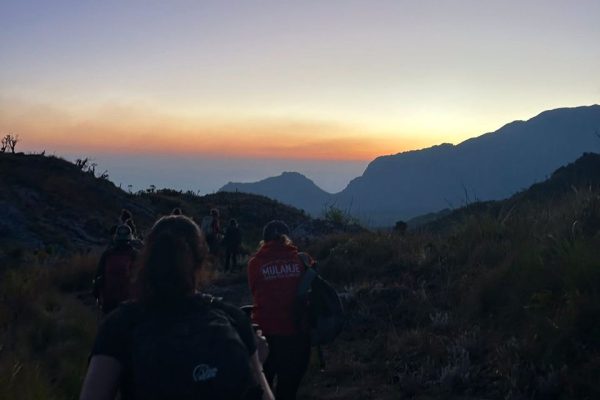
As the afternoon sun began to lower, we split into two groups to better manage the pace. The faster group was led by Hard Helmet, our lead guide, along with Dorothy, our Head of Sales and Operations who was overseeing the whole tour for the ladies. Moses, our assistant guide, and I took charge of the second group, accompanied by some of the Orbis mountain porters. We arrived at Chisepo Hut just as the sun was beginning to set, creating a breathtaking golden hour that made everyone stop to take pictures. The warm, glowing light bathed the mountain in a magical hue, and the ladies were captivated by the beauty of the moment.
The hut was quite busy that day, including a film crew shooting a documentary about the newly launched Sapitwa Beer by Castel, adding an exciting buzz to the atmosphere. After the film crew left for Chambe Hut, we settled in for the night.
Day Two: The Summit
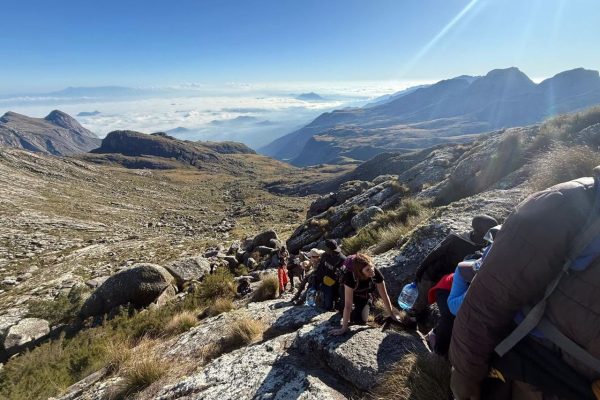
We woke early at 5 AM and were greeted by a hearty breakfast prepared by Chef George, one of our mountain chefs. By 6 AM, we set off, ready to conquer Sapitwa Peak. The day was sunny but windy. About 45 minutes into the hike, we spotted wild rabbits resting on rocks, a rare and delightful sight for many of us. As we climbed higher, the temperature dropped sharply.
Two hours later, we reached a grassland, where local villagers skillfully cut and weave local grasses into brooms and baskets. The area was frozen, with patches of ice and snow from the previous night, reminding us just how unpredictable this mountain can be. Around 10 AM, we passed through some fascinating caves that required everyone to bend down in order to pass through and thirty minutes later, the summit finally came into view.
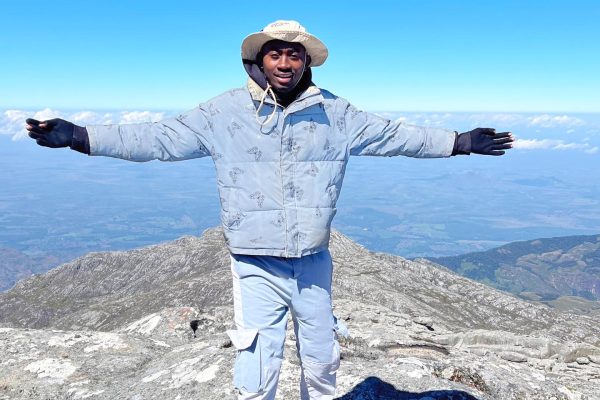
At last, we reached the beacon marking Sapitwa Peak. The summit was cold, so warm clothing is a must. We spent about 40 minutes enjoying our snacks and the panoramic views of Mozambique and the Indian Ocean. On the other side, the Lujeri Tea Plantation stretched below, blending nature and Malawian culture beautifully. Around 11 AM, we began descending to Chisepo Hut, splitting into two groups again,
Four hours later, we reached Chisepo Hut, freshened up and set off for Chambe Hut. The hike took about five hours, with steady pacing to reach before just before 7 PM. Fiona, a UK tourist, marveled at the rare chance to see the sunset, stars, and moon so clearly, an experience that made her appreciate the magic of Africa even more.
Since my last visit, Chambe Hut has undergone impressive developments. One of the most welcome improvements was the installation of solar power, which has transformed the atmosphere in the evenings. This upgrade has made nights at the hut more comfortable and vibrant, encouraging connection and cultural exchange among hikers and porters alike.
After dinner, the porters organized a bonfire, and they began by telling folktales passed down through generations from the Lomwe tribe, followed by traditional dances we all enjoyed joining in. Our clients from the UK also took the opportunity to share stories from their cultures, making the night even more fascinating and joyful.
Day Three: Final Descent and Dziwe La Nkhalamba Waterfalls
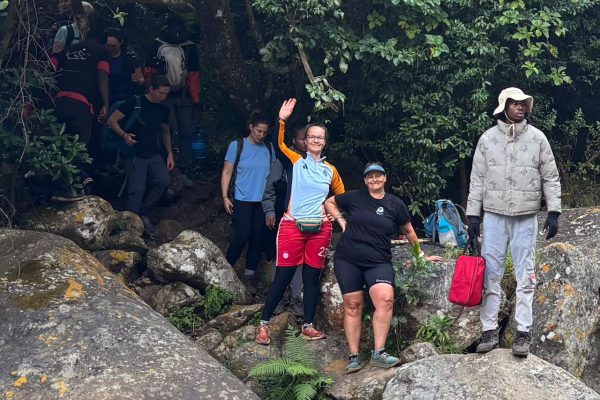
At 5 AM, breakfast was ready and then we departed the hut to descend to the mountain base. Instead of retracing the Skyline Trail, we took the Chapaluka Trail. This trail passes through the Likhubula Valley Rainforest and offers scenic views, waterfalls and natural pools perfect for swimming or camping. The area is rich with diverse Miombo woodlands, and the cool breeze along the trail helped refresh our bodies as we said goodbye to the mountain.
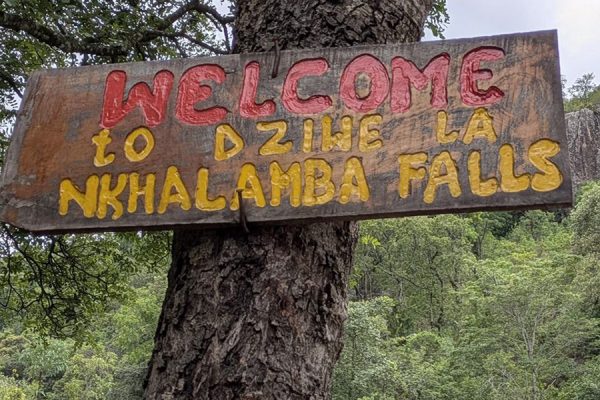
After about three hours, we reached the famous Likhubula Waterfalls, also known as Dziwe La Nkhalamba. At the waterfall, everyone was eager to jump into the natural pool. After having lunch by the water, we continued down to the mountain base, with the ladies proceeding to Majete to continue their Malawian adventure. Summiting Mulanje Mountain was an unforgettable experience, it gave me the courage to know that I am not a failure but a conqueror. Kilimanjaro is next!
Sapitwa Peak blog by Lovemore Mfunya, 24th June 2025